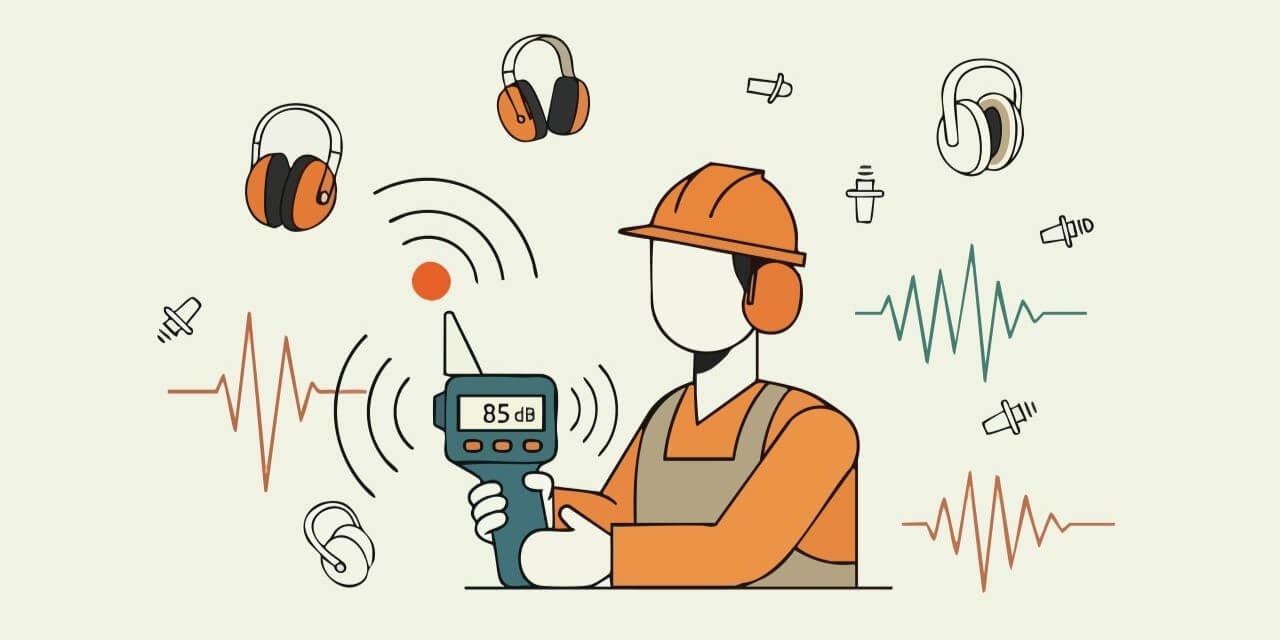
5 Indicators It’s Time for a Workplace Noise Assessment
A workplace noise assessment is needed when noise levels may be high enough to affect employee hearing, communication, productivity, or compliance decisions. Practical warning signs include employees needing to shout to be heard, workers reporting ringing ears or temporary hearing difficulty after shifts, loud equipment or machinery, a lack of recent noise measurements, and uncertainty about OSHA hearing conservation requirements.
A professional noise exposure assessment helps determine how loud work areas are, which employees or tasks may be affected, and whether additional controls, hearing protection, monitoring, or program elements should be considered.
What Is a Noise Exposure Assessment?
A noise exposure assessment is an industrial hygiene evaluation that measures workplace noise so employers can understand employee exposure and make informed safety decisions. It may include personal noise dosimetry, sound level measurements, area surveys, octave band analysis, noise mapping, task observations, and a technical report with findings and recommendations.
The goal is not simply to confirm that a workplace is “loud.” The goal is to understand how noise varies by employee, task, work area, equipment, and shift duration.
A professional workplace noise assessment can help answer questions such as:
- Which employees or job groups have the highest potential exposure?
- Are noise levels high enough to require additional evaluation or controls?
- Are hearing protectors appropriate for the measured noise environment?
- Are engineering or administrative controls practical?
- Does the facility need a hearing conservation program or updated documentation?
- Which equipment, work areas, or tasks contribute most to the noise profile?
Summit’s industrial hygiene services include noise exposure assessments, personal noise dosimetry, sound level surveys, detailed 8-hour TWA reporting, and recommendations for noise exposure control.
Sign #1: Employees Struggle to Communicate in Work Areas
One of the clearest signs that a workplace noise assessment may be needed is simple: employees have to raise their voices or shout to communicate in normal work areas.
OSHA notes that noise may be a problem in a workplace when employees have to shout to be heard by a coworker at arm’s length. OSHA also notes that exposure over 85 decibels can damage hearing. While this type of communication difficulty is not a substitute for measurement, it is a practical screening sign that noise levels may need professional evaluation.
This can show up in areas with:
- Production equipment.
- Compressors, generators, pumps, or fans.
- Saws, grinders, presses, conveyors, or pneumatic tools.
- Heavy mobile equipment.
- Construction or maintenance activity.
- Enclosed rooms where sound reflects off hard surfaces.
If communication requires shouting, assumptions are not enough. Noise level measurement can help determine whether the concern is isolated, task-specific, or part of a broader exposure pattern.
Sign #2: Workers Report Ringing Ears or Hearing Difficulties
Ringing or humming in the ears after work, temporary hearing difficulty, or complaints that employees cannot hear clearly after a shift should be taken seriously. OSHA lists ringing or humming in the ears after leaving work and temporary hearing loss after work as indicators that noise may be a workplace problem.
Noise-induced hearing loss can develop gradually. Employees may not recognize the early signs until communication becomes harder, especially in areas with background noise. OSHA explains that exposure to loud noise can damage hearing receptor cells in the inner ear, and the resulting hearing loss can be permanent.
Reports of ringing ears or hearing difficulty do not automatically prove an overexposure. They do indicate that the facility should consider whether noise exposure has been properly measured, documented, and controlled.
Sign #3: Your Facility Uses Loud Equipment or Machinery
Some workplaces carry obvious noise potential because of the equipment or processes involved. Manufacturing, fabrication, woodworking, food processing, construction, mining, oil and gas, maintenance shops, and industrial production areas may all include high-noise tasks.
Examples include:
- Metal fabrication, grinding, cutting, stamping, or machining.
- Saws, routers, planers, chippers, or other woodworking equipment.
- Pneumatic tools, compressed air, and impact tools.
- Pumps, compressors, blowers, fans, or turbines.
- Heavy equipment, forklifts, loaders, or generators.
- Demolition, drilling, concrete cutting, or construction activity.
- Bottling, packaging, conveying, or high-speed production lines.
The challenge is that perceived loudness does not always show the full exposure picture. A short, very loud task may create a different exposure profile than moderate noise that continues for an entire shift. A noise exposure assessment can evaluate both the level of sound and the duration of exposure.
Sign #4: Noise Levels Have Never Been Measured
Many facilities rely on history: “It has always sounded this way.” That can create a gap if equipment, production rates, materials, building layout, staffing, or work schedules have changed.
Noise levels should be measured when there is uncertainty about exposure, when work areas change, or when the company needs a factual basis for hearing protection, equipment controls, or hearing conservation decisions. OSHA’s noise standard requires employers to monitor when information indicates that an employee’s exposure may equal or exceed an 8-hour time-weighted average of 85 dBA.
Common triggers for a new industrial noise survey include:
- New equipment or production lines.
- Equipment relocation or facility layout changes.
- Increased production speed or longer shifts.
- Employee complaints about noise or hearing.
- Changes in hearing protection practices.
- Contractor, owner, insurer, or corporate EHS requests.
- No documented noise survey in recent facility records.
If a facility has never completed noise level measurement, leaders may be making PPE, training, and compliance decisions without the exposure data needed to support them.
Sign #5: You Need to Meet OSHA or Workplace Safety Requirements
Noise monitoring is often tied to regulatory and safety program decisions. OSHA requires general industry, maritime, and longshoring employers to implement a hearing conservation program when employee noise exposures equal or exceed 85 dBA as an 8-hour time-weighted average. OSHA also notes that engineering or administrative controls are required when noise exposure is above 90 dBA as an 8-hour TWA.
For construction, OSHA explains that noise and hearing conservation are addressed in specific standards and that administrative or engineering controls, along with a continuing and effective hearing conservation program, are required when exposures exceed 90 dBA as an 8-hour TWA.
This is where professional noise monitoring services can help. A noise exposure assessment can provide the measurement data needed to understand:
- Whether employees may be at or above action levels.
- Which workers or job groups are affected.
- Whether a hearing conservation program may be needed.
- Whether controls should be evaluated.
- Whether hearing protection selection should be reviewed.
- What documentation should be maintained for future reference.
Summit’s OSHA consulting and auditing services can also support organizations that need help evaluating OSHA program requirements, documentation, and corrective priorities.
Benefits of Conducting a Noise Exposure Assessment
A noise exposure assessment helps employers make practical decisions with measured data instead of relying on impressions. The benefits may include:
- Better understanding of noise exposure by task, area, and employee group.
- More defensible hearing protection and hearing conservation decisions.
- Identification of equipment or work areas that contribute most to noise exposure.
- Documentation for EHS records, OSHA questions, insurance needs, or owner requirements.
- Support for engineering controls, administrative controls, or work-practice changes.
- Improved employee communication about what was measured and what the results mean.
Noise assessments can also help avoid overcorrecting. Not every loud area creates the same exposure, and not every employee has the same risk profile. Good data helps focus resources where they matter most.
What Happens During a Professional Noise Exposure Assessment?
A professional noise exposure assessment usually starts with a review of work areas, tasks, equipment, shifts, and employee groups. The consultant then selects the right measurement approach for the question being answered.
The assessment may include:
- Personal noise dosimetry for employees or representative job groups.
- Sound level measurements in specific areas or near equipment.
- Observation of tasks, equipment cycles, and work practices.
- Documentation of exposure duration, shift length, and unusual conditions.
- Review of hearing protection use and potential control options.
- Data interpretation using appropriate occupational noise criteria.
- A written report with results, conclusions, and recommendations.
Summit describes noise assessment work that can include personal noise exposure dosimetry, sound level surveys, color-coded noise mapping, 8-hour TWA reports, and hearing protector effectiveness evaluations. For employers, that kind of technical reporting can help translate noise measurements into clear next steps.
Don’t Wait Until Hearing Damage Occurs
Workplace noise is easy to normalize because employees and managers may hear it every day. But familiar noise is not the same as controlled noise. OSHA and NIOSH both emphasize prevention because occupational hearing loss can be permanent.
If employees are shouting to communicate, reporting ringing ears, working around loud equipment, relying on undocumented assumptions, or facing OSHA/hearing conservation questions, a professional workplace noise assessment is a practical next step.
Summit can help evaluate your facility’s noise profile, identify affected work areas or employee groups, and provide technical recommendations for noise exposure control and documentation. Talk with Summit about your facility, equipment, or work area to determine whether a professional noise exposure assessment is the right next step.
Workplace Noise Assessment FAQs
What is a workplace noise assessment?
A workplace noise assessment is a professional evaluation of noise levels and employee exposure. It may include personal noise dosimetry, sound level measurements, area surveys, noise mapping, and recommendations for hearing protection, controls, or hearing conservation program decisions.
How do I know if noise is too loud at work?
Noise may need evaluation if employees have to shout to communicate, report ringing ears or temporary hearing difficulty after work, use loud equipment, or do not have recent noise measurement records. The only way to confirm exposure levels is to measure them.
What does OSHA require for workplace noise?
OSHA requires monitoring when information indicates employee exposure may equal or exceed an 8-hour TWA of 85 dBA. In general industry, hearing conservation program requirements apply at or above 85 dBA as an 8-hour TWA, and engineering or administrative controls are required above 90 dBA as an 8-hour TWA.
What is the difference between a sound level survey and noise dosimetry?
A sound level survey measures noise levels in areas, near equipment, or during tasks. Noise dosimetry measures an employee’s personal noise exposure over time, often across a full shift. Many workplace noise assessments use both methods.