Industrial Noise Exposure Assessments and Occupational Noise Testing
Industrial workplaces are full of moving parts, heavy equipment, alarms, ventilation systems, and production demands that can create consistently high noise levels. In many environments, that noise becomes part of the background so quickly that teams stop questioning whether it may be creating risk. That is one reason industrial noise testing plays such an important role in a proactive safety program.
Noise-related hazards are often harder to identify than more visible workplace risks. Employees may not immediately notice gradual hearing changes, and leadership teams may not realize how often workers are exposed to elevated noise levels throughout a shift. Without a structured way to evaluate those conditions, it becomes difficult to know whether current controls are sufficient or whether employees may be operating in an environment that requires closer attention.
A strong evaluation process gives employers better visibility into what workers are actually experiencing on the floor. Industrial noise exposure assessments help organizations identify where sound levels may be a concern, understand which roles are most affected, and take practical steps to protect their workforce. When done well, this work supports compliance, improves communication, and strengthens long-term workplace safety.
Why Industrial Noise Hazards Deserve Closer Attention
In industrial settings, noise is often treated as an unavoidable part of operations. Production equipment, forklifts, compressors, fabrication tools, and mechanical systems can all contribute to elevated sound levels throughout the day. Over time, that exposure can become so routine that it is no longer recognized as a hazard worth evaluating.
That assumption can create real gaps in protection. Workers may need to raise their voices to communicate, repeat instructions, or rely more heavily on visual cues because verbal communication becomes harder in certain areas. Those conditions do not just affect hearing over time. They can also affect awareness, teamwork, and the safety of work in active environments.
An industrial noise assessment helps move safety leaders away from assumptions and toward measurable insight. Instead of estimating whether a space is too loud, employers can better understand where risk may exist, how often exposure occurs, and what kind of response is appropriate for the environment.
What Industrial Noise Testing Typically Involves
Industrial noise testing is designed to evaluate the level of sound employees are exposed to during their workday and how those exposures vary by task, location, and duration. Rather than treating noise as a single broad issue, the process helps break exposure down into practical, work-based conditions that can be evaluated more clearly.
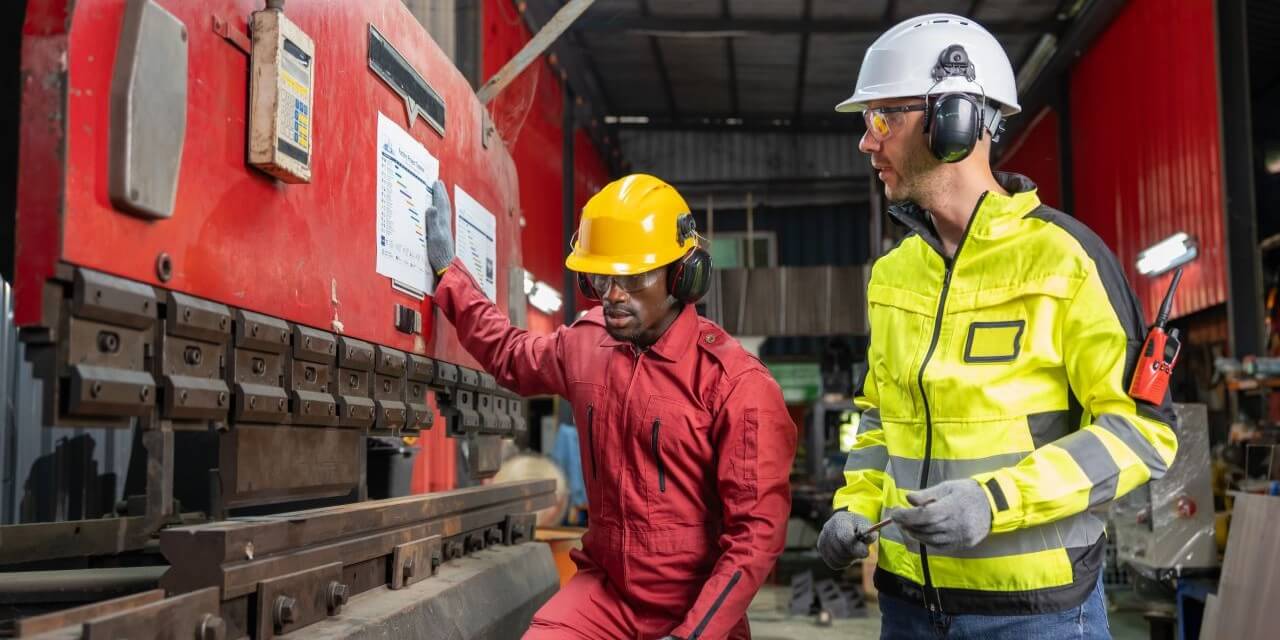
This often includes observing how employees move through the facility, identifying major noise sources, and reviewing how work is actually performed during a shift. Some employees may spend only short periods near louder equipment, while others may work around elevated sound for much longer durations. Understanding those patterns is essential to building an accurate picture of exposure.
In many cases, the process may also involve an industrial noise survey to compare sound conditions across departments, work zones, or job roles. This helps organizations identify where exposure may be most significant and where additional controls, monitoring, or review may be needed.
How Industrial Noise Monitoring Supports Safer Decisions
One of the most valuable outcomes of industrial noise monitoring is that it helps employers make more informed decisions instead of reacting only when concerns are raised. When organizations have clearer exposure data, they are better positioned to determine whether current safeguards align with actual workplace conditions.
That can support improvements across multiple areas of a safety program. Findings may help teams evaluate whether engineering controls should be strengthened, whether maintenance practices could reduce sound output, or whether administrative strategies such as job rotation may be helpful in certain settings. In some cases, monitoring may also support more effective decisions around hearing protection expectations and employee training.
Industrial noise monitoring also supports better planning over time. As facilities evolve, equipment changes, or production demands increase, sound conditions can shift in ways that are not always obvious. Monitoring gives organizations a way to stay aware of those changes and maintain a more current understanding of workplace risk.
Understanding the Role of OSHA Noise Standards
For many employers, one of the key reasons to evaluate workplace sound exposure is to better align with OSHA noise standards and overall hearing conservation responsibilities. While compliance should not be the sole reason an employer takes noise seriously, it is an important part of maintaining a defensible, well-managed safety program.
A thoughtful assessment process can help employers understand whether workplace conditions may warrant additional review, stronger documentation, or changes to current protective measures. It can also help clarify whether assumptions about “normal” operating conditions still hold up under real-world measurement and observation.
More importantly, using OSHA noise standards as part of a broader prevention strategy helps keep the focus where it belongs – on protecting workers before issues become harder to correct. Compliance is important, but the bigger goal is creating a work environment where employees can do their jobs safely and with confidence.
When Employers Should Consider an Industrial Noise Assessment
Some workplaces only begin evaluating sound exposure after an employee concern, an equipment change, or an outside request brings the issue to attention. But waiting until a problem surfaces can leave organizations reacting later than they should. In many cases, an industrial noise assessment is most valuable when used proactively.
This can be especially important when new equipment is introduced, production lines are reconfigured, output increases, or work processes change significantly. Even small operational shifts can affect how sound travels through a facility and how often employees are exposed to elevated levels throughout the day.
Employers may also benefit from an assessment to better understand which areas of the facility should be prioritized. A structured evaluation can help teams focus their efforts on the areas of exposure that are most relevant, rather than applying the same assumptions across an entire operation.
Why Employers Often Work With Noise Level Testing Companies
Not every organization has the internal resources or technical experience to evaluate workplace sound exposure in a consistent and structured way. That is one reason many employers choose to work with noise level testing companies when they want a clearer understanding of employee exposure and workplace conditions.
An outside perspective can help remove guesswork from the process. It allows employers to better understand where noise may be creating concern, which employee groups may be most affected, and where practical next steps may be needed. For facilities with multiple departments, variable workflows, or several overlapping noise sources, that level of clarity can be especially useful.
Working with experienced noise-level testing companies can also help organizations build a more defensible foundation for future decisions. Whether the goal is prevention, documentation, or long-term program improvement, having a structured process in place makes it easier to respond with confidence.
Better Visibility Leads to Better Protection
You cannot reduce a workplace hazard effectively if you do not fully understand where it exists or how it affects your workforce. Industrial noise testing gives organizations a clearer view of employee exposure, enabling them to make smarter, more informed safety decisions. It helps move teams from assumptions to action.
When supported by industrial noise monitoring, an industrial noise survey, and a thoughtful industrial noise assessment process, employers are better positioned to protect workers and strengthen their overall safety strategy. In industrial environments where noise is often treated as background, visibility is what turns a common risk into a manageable one. That is where meaningful prevention begins.